
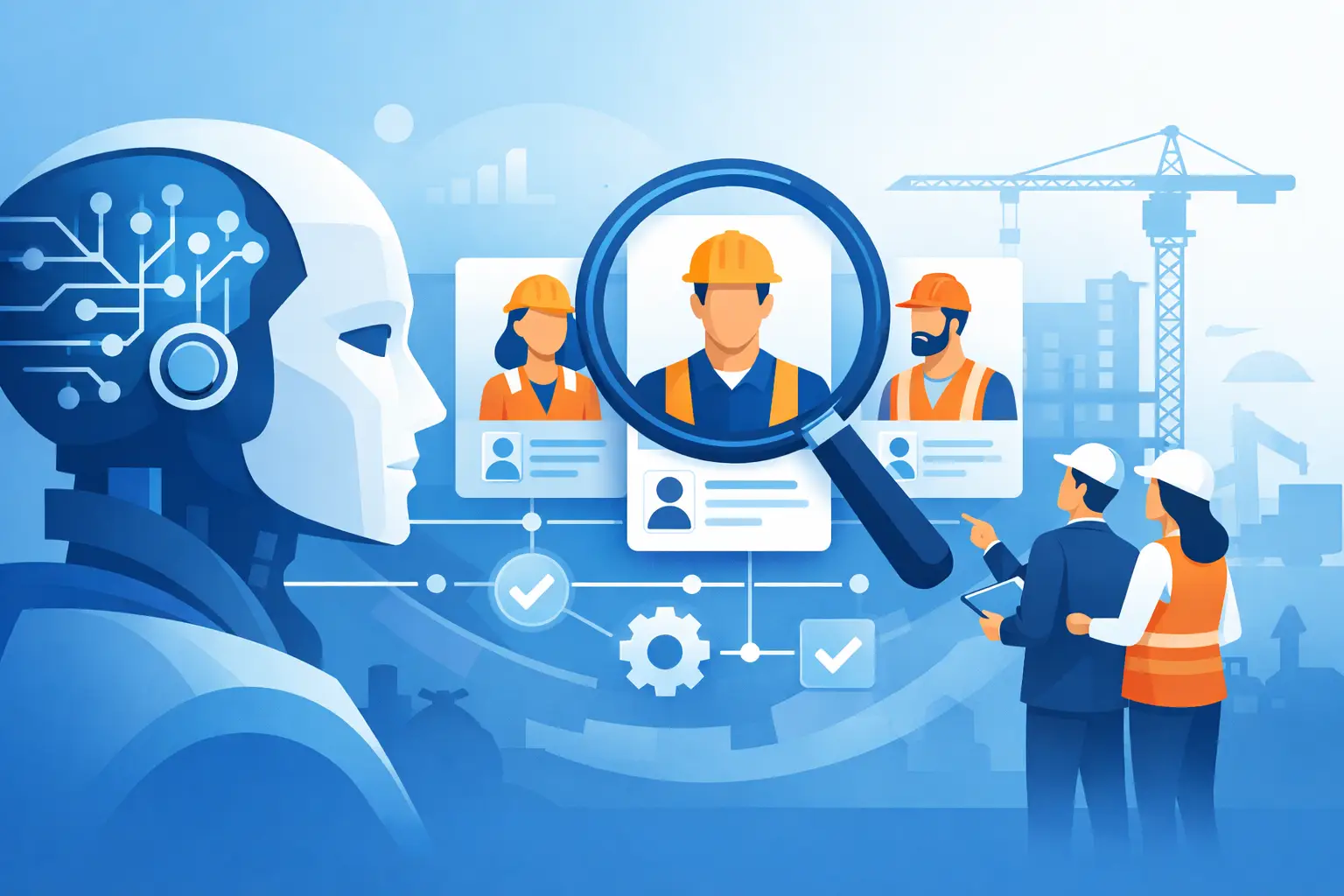
A superintendent needs three licensed electricians by Monday. A plumbing company needs one service tech with commercial retrofit experience, not just anyone who has held a wrench. A GC needs labor now, but cannot afford a bad fit that slows the job. That is where ai matching for construction hiring starts to matter - not as a flashy feature, but as a practical way to cut time, reduce guesswork, and connect the right people to the right work.
Generic hiring platforms were not built for construction. They treat a carpenter like an office candidate, flatten trade experience into a resume, and leave hiring teams to sort through applications that look fine on paper but fall apart in the field. Construction hiring is different. Skills are specialized, licenses matter, project timelines move fast, and proof of work carries real weight. AI can help, but only when it is trained around the realities of skilled trades.
What ai matching for construction hiring actually does
At its best, ai matching for construction hiring does more than scan keywords. It compares the actual requirements of a role against the real qualifications of a worker. That includes trade type, certifications, years of experience, project history, location, availability, and in many cases whether the worker has completed similar jobs before.
For employers, that means fewer unqualified applicants and a tighter shortlist. For workers, it means better job recommendations based on what they actually do, not what a generic algorithm guesses from a resume title. A journeyman electrician and an apprentice electrician should not be treated as interchangeable. Neither should a residential plumber and a commercial plumbing foreman. Good matching respects those differences.
This matters because hiring speed in construction only helps if the fit is right. Filling a role fast with the wrong candidate creates rework, safety issues, and turnover. AI improves the first pass, so hiring managers spend less time sorting and more time speaking with people who are likely to perform.
Why construction needs a different kind of matching
Construction labor is not one market. It is a collection of trades, certifications, project types, and regional requirements. The same job title can mean different things depending on the contractor, the site, and the scope of work. That complexity is exactly why standard recruiting software often misses the mark.
An effective construction matching system looks beyond job titles. It understands that a welder with structural steel experience is different from one focused on pipe welding. It recognizes that HVAC work in new construction is not the same as service and maintenance. It weighs whether someone has a valid license, whether their work history aligns with the project, and whether their availability fits the schedule.
That creates a more reliable match because the system is built around field-based hiring, not office hiring. In construction, the difference between qualified and truly ready is expensive. A strong match should reflect not only whether a worker can do the job, but whether they can do this job.
Better inputs create better hiring outcomes
AI is only as good as the information it can evaluate. If a platform relies on thin profiles and unverified claims, the output will be thin too. That is one of the biggest misunderstandings in hiring tech. The algorithm is not magic. It needs quality data.
For construction, quality data means verified licenses where applicable, documented employment history, trade-specific skills, and visible project work. Portfolios matter here more than many employers realize. A finished install, a framing package, a welding project, or a masonry job can tell a hiring team far more than a vague bullet point on a resume.
Background checks and validation also raise the quality of the match. If a candidate says they have five years of experience running commercial jobs, a platform built for trades should help employers trust that claim. When verification is part of the process, AI matching becomes more useful because it is ranking based on stronger evidence.
That is where specialized platforms have an edge. A construction-first marketplace can combine AI-powered recommendations with worker profiles that reflect how hiring decisions actually get made in the trades. On go2work, for example, matching works best because it sits alongside credential validation, project portfolios, and direct communication tools instead of operating in isolation.
How employers benefit from ai matching for construction hiring
The clearest benefit is speed, but speed is only the beginning. When matching is done well, employers spend less time reviewing noise and more time moving qualified candidates through the process. That shortens time-to-hire and reduces the cost of leaving jobs understaffed.
It also improves consistency. Hiring teams often rely on whoever is available to review applicants, and that can create uneven results. AI helps standardize the first layer of screening around objective criteria like trade, certifications, experience, location, and work history. Human judgment still matters, but now it starts from a better shortlist.
There is also a practical operational benefit. Construction workforce needs change week to week. One month a company needs finish carpenters. The next month it needs welders for a tighter geography and a shorter timeline. AI can adapt faster than a manual process that starts from scratch each time. That flexibility matters for project-based staffing, seasonal hiring, and multi-site operations.
The trade-off is that employers still need to define roles clearly. If the job post is vague, the matching will be less precise. A request for a plumber is one thing. A request for a licensed commercial plumber with hospital renovation experience and night-shift availability is another. Better job inputs produce better candidate outputs.
What workers gain from smarter matching
Tradespeople feel the pain of poor matching too. They waste time applying to jobs that are not a fit, hearing nothing back, or getting contacted about work that does not match their pay expectations, skill level, or location. That is frustrating, especially for workers who already have proven experience.
AI can improve that by surfacing jobs aligned with a worker's actual trade and background. Instead of getting lumped into a broad skilled labor category, a mason can be matched to masonry work. An HVAC technician can be matched based on installation or service experience. A welder can be surfaced for the right process, not just any opening with the word welding attached.
That kind of precision does more than save time. It helps workers present themselves professionally. When their profile includes verified credentials, employment history, and examples of completed work, they are more likely to be seen for what they can actually do. That increases visibility and can lead to stronger offers, better-fit roles, and steadier career growth.
Where AI helps and where humans still decide
Construction hiring should not be handed over entirely to software. AI is useful for sorting, ranking, and identifying fit signals at scale. It is not a replacement for judgment. Employers still need to assess reliability, communication, safety awareness, and whether someone fits the crew and the jobsite culture.
There are also cases where the best hire is not the highest algorithmic score. A worker may have slightly less direct experience but stronger references, better availability, or a work history that shows long-term reliability. That is why the strongest hiring process uses AI to narrow the field and people to make the final call.
In other words, AI should remove friction, not responsibility. The goal is not to automate trust. The goal is to build it faster with better information.
What to look for in a construction hiring platform
If you are evaluating platforms, the question is not whether they offer AI. Plenty do. The better question is whether their AI is built for construction hiring or simply layered onto a generic system.
Look for trade-specific profiles, credential verification, portfolio support, location-aware matching, and direct messaging that keeps the process moving. Check whether the platform can distinguish between skill levels, project types, and license requirements. Ask how worker data is validated and how employers can review proof of experience beyond a resume.
That combination matters because matching alone will not solve construction hiring if the surrounding system still creates friction. The best results come from platforms that connect discovery, validation, and communication in one workflow.
Construction hiring has always moved on trust, timing, and proof. AI does not change that. It just makes it easier to find qualified people before the job falls behind. The companies and tradespeople who benefit most will be the ones using better signals, not just faster software.